
MAYE° CBD PREMIUM
FLAGSHIP

Our CBD portfolio: Isolate - Full-spectrum oil - Cannabinoids on customer request
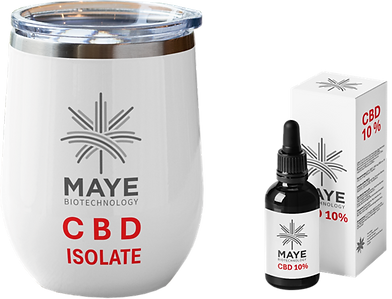
Yunnan Maye Biotech is a biotech company within Tasly Pharma. Maye means "hemp leaf" and reflects the plant's long tradition in China. At this production hub, the company holds licenses for the cultivation and processing of hemp in Yunnan Province and maintains departments for research and development, breeding, cultivation, processing, extraction, patents, and marketing & sales. Founded in early 2019, Yunnan Maye Biotech focuses on the hemp plant, encompassing the entire industrial value chain: from variety selection and breeding, cultivation, processing, and harvesting of industrial and medicinal hemp, to research and development (R&D), production, marketing, and distribution of hemp extracts and finished products. For the European market, CBD isolate, CBD oils (5% and 10%), and other cannabinoids are available upon request.
CBD with strict Japanese limits (1 ppm THC) and organic certifications.

Cannabidiol (CBD) is subject to varying regulatory requirements in different countries. Japan has particularly strict limits for Δ9-tetrahydrocannabinol (THC), with a maximum content of 1 ppm (0.0001%) not permitted. Products must be highly purified and analytically tested to meet these requirements. Furthermore, certified organic cultivation and production methods are gaining increasing importance. Organic certifications guarantee controlled production conditions, the avoidance of synthetic pesticides, and a transparent supply chain, which is particularly relevant in the context of quality assurance and consumer protection.

The body's own endocannabinoid system

The endocannabinoid system (ECS) is a complex regulatory network that plays a central role in maintaining homeostasis. It comprises endogenous ligands (endocannabinoids), their synthesis and degradation enzymes, and specific receptors, particularly the CB1 and CB2 receptors. The CB1 receptor is predominantly located in the central nervous system and modulates, among other things, neuronal excitability, pain processing, appetite, and mood. The CB2 receptor is found predominantly in peripheral tissues, especially in the immune system, and is involved in the regulation of inflammatory processes.
Research on the ECS has gained considerable importance in recent years. One focus of this research is cannabidiol (CBD). Unlike Δ9-tetrahydrocannabinol (THC), CBD does not have a direct agonistic effect on CB1 or CB2 receptors, but rather acts indirectly, for example by modulating enzymatic degradation processes of endocannabinoids or by interacting with other molecular target structures such as TRP channels and serotonin receptors.